PAYMENT × POS SYSTEM
Designing a tablet-based POS experience that extends the AES-CUT payment ecosystem, helping menu-heavy Japanese stores manage complex orders while keeping checkout simple for staff and customers.

ROLE
UX/UI Designer
CLIENT
Arunas Akatsuki Denki
PLATFORM
POS Tablet / Payment System
RESPONSIBILITIES
UX Design · UI Design · User Flow · Prototyping · Client Collaboration
OVERVIEW
Expanding Payment Beyond a Limited Menu
● About
PayQR Sutokon is a tablet-based POS experience designed to extend the existing AES-CUT payment ecosystem. It allows stores to manage significantly larger and more complex orders before handing payment to AES-CUT for cash or credit card processing.
● Background
Arunas already had AES-CUT for payment processing, but its existing interface could manage only four menu selections. This created a limitation for menu-heavy businesses such as Japanese izakaya, where staff may need to process many food items, drinks, quantities, prices, and tax treatments.
The Problem
The Payment Worked. The Ordering Model Didn't Scale.
01
Only 4 Menu Options
AES-CUT could process payments, but only four menu selections.
02
Menu-Heavy Stores
Izakaya need many food items, drinks, quantities, prices during one transaction.
03
More Menu = More Complexity
More products mean more quantities, prices, tax, totals to verify.
04
Two Different Jobs
Same ecosystem needed complex order prep while keeping customer payment simple.
Users
One Store Environment. Different Levels of Responsibility.
CUSTOMER
• Understand payment
• Confirm amount
• Complete payment confidently
STAFF
• Scan products
• Manage quantities
• Verify totals
• Process orders quickly
AUTHORIZED STAFF / MANAGER
• Manage settings
• Access transaction history
• Issue operational codes
• Maintain the system
Because the tablet exists physically inside the store, the UX couldn't assume a single type of user. This influenced navigation, security, information hierarchy, and passcode protection.
Main Objective
Complex Behind the System. Simple at the Counter.

Rather than moving every function onto the payment terminal, I separated order management from payment processing. Sutokon handles complex order preparation while AES-CUT remains focused on payment.
SUTOKON
Order Management
QR
Settlement handoff
PAY
USER FLOW
Connecting Ordering and Payment
01 / SIX
CUSTOMER ORDERS
Customer communicates the order to staff at the table or counter.
02 / SIX
SCAN PRODUCTS
Staff scan product codes quickly to add food and drinks to the tablet cart.
03 / SIX
REVIEW & ADJUST
Staff review products, quantities, prices, taxes, and totals dynamically.
04 / SIX
GENERATE CODE
Sutokon generates and prints a unique QR settlement code for check.
05 / SIX
PAY WITH AES-CUT
Customer completes payment securely using cash or credit card at terminal.
06 / SIX
TRANSACTION SAVED
Settlement information remains permanently accessible for store operation.
● Core Experience
Six Steps From Order to Payment
01
SCAN →
02
REVIEW →
03
ADJUST →
04
CONFIRM →
05
PRINT →
06
PAY
SUTOKON · 01—05
AES-CUT · 06
PAYQR
12:45
商品コードを読み取ってください
商品名
単価
消費税額
数量
金額
生ビール
¥680
10%
2
¥1,360
焼き鳥盛合せ
¥980
10%
1
¥980
ウーロン茶
¥380
8%
3
¥1,140
合計
¥3,480
PAYQR
12:45
商品コードを読み取ってください
商品名
単価
消費税額
数量
金額
生ビール
¥680
10%
2
¥1,360
焼き鳥盛合せ
¥980
10%
1
¥980
ウーロン茶
¥380
8%
3
¥1,140
合計
¥3,480
1
2
3
4
5
6
7
8
9
0
取消
決定
PAYQR
12:45
商品コードを読み取ってください
商品名
単価
消費税額
数量
金額
生ビール
¥680
10%
2
¥1,360
焼き鳥盛合せ
¥980
10%
1
¥980
ウーロン茶
¥380
8%
3
¥1,140
合計
¥3,480
PAYQR
12:45
商品コードを読み取ってください
商品名
単価
消費税額
数量
金額
生ビール
¥680
10%
2
¥1,360
焼き鳥盛合せ
¥980
10%
1
¥980
ウーロン茶
¥380
8%
3
¥1,140
合計
¥3,480
1
2
3
4
5
6
7
8
9
0
取消
決定
● Error Prevention
Before Money Moves, Give the User One More Chance to Check.
PAYQR
12:45
精算内容を確認してください
商品名
単価
消費税額
数量
金額
生ビール
¥680
10%
2
¥1,360
焼き鳥盛合せ
¥980
10%
1
¥980
ウーロン茶
¥380
8%
3
¥1,140
合計
¥3,480
戻る
精算用コードを印刷
Selecting 「精算用コードを印刷」 moves the transaction from an editable order into payment. Because this is a meaningful transition, I introduced a final confirmation state showing purchase information, quantities, individual amounts, and the final total.
EDITABLE ORDER →
FINAL REVIEW →
SETTLEMENT QR →
PAYMENT
Confirmation isn't unnecessary friction when the next action commits the transaction.
● Transaction Management
The Customer Journey Ends at Payment. The Store's Doesn't.
Staff need visibility into what happened after a settlement code was generated. The history surfaces: Settlement number, Status, Update time, Issue time, Quantity, Issued amount, Settlement amount.
All transactions
All transactions
Remittance
Deposit
Bills Payment
Settlement number
Status
Update time
Issued amount
State
ST-02481
発行済 ISSUED
14:32
¥4,860
Ready
ST-02480
精算済 SETTLED
14:18
¥8,240
Completed
ST-02479
取消済 CANCELLED
13:51
¥2,100
Canceled
ST-02478
戻し処理済 REFUND PROCESSED
13:22
¥6,430
Processing
Payment became a traceable operational workflow instead of a one-way action.
● Beyond the Happy Path
Real Store Operations Don't Follow One Happy Path.
REFUNDS
Dedicated refund-code workflow.
DISCOUNTS
Configure discount amounts, minimum purchase values, activation dates, and expiration periods.
PETTY CASH
Control withdrawal operations using staff codes, limits, denomination settings, and device information.
Don't expose complexity everywhere just because the system needs to support it somewhere.
● Security
If Customers and Staff Share the Environment, Access Matters.
PAYQR
12:45
パスコードを入力
管理機能を使用するには認証が必要です
1
2
4
5
6
7
8
9
0
取消
決定
CUSTOMER ↓
Payment interaction
STAFF ↓
Daily POS operation
AUTHORIZED STAFF
Settings & administration
Because the tablet may be physically accessible around both customers and employees, administrative functionality shouldn't automatically be available to everyone. Configurable passcode protection creates a boundary between everyday use and administrative operations.
SOLUTION 03
A Clear Handoff From Order to Payment
Instead of forcing ordering and payment into the same interface, Sutokon creates a clear handoff between the two systems. Once the order is ready, staff select 精算用コードを印刷 to generate the settlement code. Before printing, a confirmation screen displays the purchase information and final amount, providing a final checkpoint before the transaction moves to AES-CUT.
STEP 01
SUTOKON
Order Entry & Review
STEP 02
PRINT QR
Generate Settlement Code
STEP 03
AES-CUT
Terminal Checkout Payment
SUTOKON (Order Management)
The primary touchpoint for floor staff to select products, edit counts, and confirm transaction readiness without handling actual currency mechanisms.
AES-CUT (Payment Processing)
The dedicated hardware terminal that scans the printed barcode and accepts physical cash, credit cards, or digital wallets safely at the counter.

PRODUCT ECOSYSTEM
Supporting the Store Beyond Payment
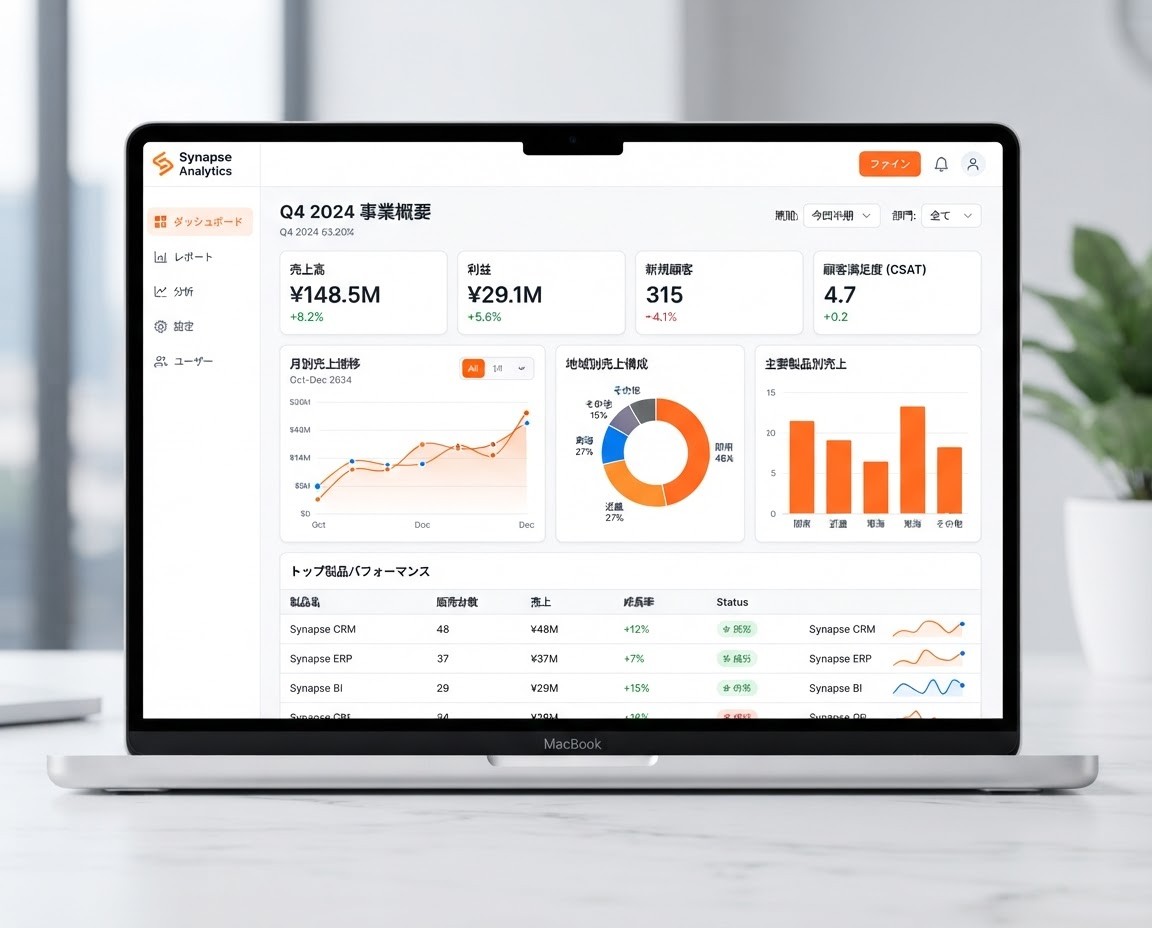
Sutokon was designed as more than an order-entry interface. The system also supports the operational tasks required to run and maintain the payment environment.
DAILY POS
•
Order entry & line items
•
Quantity editing in real-time
•
Settlement QR barcode generation
TRANSACTIONS
•
Comprehensive settlement history
•
Receipt reissue & cancel operations
•
Granular transaction metadata lookup
STORE & STAFF
•
Store environment configurations
•
Unique staff identification codes
•
Strict supervisor passcode protection
•
Printed receipt header/footer custom text
SYSTEM & BUSINESS
•
On-device printer maintenance
•
Over-the-air software updates
•
Hardware peripheral diagnostic checks
•
Operation event logs
•
Offline storage syncing
•
Local daily sales aggregation
PRODUCT ECOSYSTEM
Quick answers here. Deeper analysis there.
TRANSACTION (Sutokon)
↓
QUICK PERFORMANCE CHECK · Sales Total · Average · Comparison
↓
DEEPER ANALYSIS (Mobapro)
SUTOKON
Sutokon · 売上管理
→
SOLUTION 02
Fast Editing Without Interrupting the Checkout

Store staff often need to change quantities quickly, particularly for drinks and repeated menu items. Direct quantity editing with a large numeric keypad allows staff to update orders without navigating away from the main POS experience. The total item count and final amount remain visible, helping staff verify the order before proceeding.
Large touch targets
Optimized for rapid kitchen/counter use
Direct editing
Instantly override and calculate totals
Visible totals
Live checkout impact remains clear
Reduced navigation
No modal fatigue or menu interruption
OUTCOME
From a Limited Payment Interface to a Scalable Store Experience
PayQR Sutokon expanded the existing AES-CUT ecosystem beyond its limited menu interface, creating a tablet experience capable of supporting menu-heavy businesses and more complex store operations. By separating ordering, payment, transaction management, and administration, the system can accommodate significantly larger menus without placing all of that complexity into the checkout experience.
ORDER
SETTLEMENT
PAYMENT
HISTORY
MANAGEMENT
MORE FLEXIBLE
Seamlessly supports menu-heavy environments with customizable catalogs, stepping far past previous hardcoded terminal menu bounds.
MORE CONNECTED
Bridges the operational gap between tablet POS ordering entry, downstream terminal checkouts, and back-office executive business reporting.
EASIER TO OPERATE
Preserves cognitive load for counter staff during busy checkout cycles. Complex configurations remain accessible but securely separated.
SOLUTION 02
What I would improve next
01
TEST WITH STORE STAFF
Run task-based usability testing with staff across simple and complex orders.
02
MEASURE CHECKOUT PERFORMANCE
Instrument transaction completion time and correction rates.
03
VALIDATE THE SUTOKON → MOBAPRO JOURNEY
Measure whether managers understand when to continue into deeper analytics.
04
DESIGN FOR HIGH-PRESSURE CONDITIONS
Validate touch targets, readability, system feedback, and recovery during busy store operations.
● Outcome
From Four Menu Options to a Scalable Store Workflow
BEFORE — AES-CUT
4
menu options → Payment
AFTER — SUTOKON + AES-CUT
Large order handling →
Quantity & tax management →
Settlement →
Cash/card payment →
Transaction history →
Operational controls →
Sales management
The result wasn't simply an interface with more menu capacity. Sutokon created an operational layer around AES-CUT that allows complex restaurant orders to be prepared before handing payment to the payment machine. By separating responsibilities between ordering and payment, the ecosystem can support greater operational complexity while keeping the core counter flow straightforward.
REFLECTION
Designing for Operations, Not Just Screens
This project reinforced that designing a POS product is not only about making individual screens easy to use. The experience has to work as part of a larger operational ecosystem — across staff roles, customers, payment hardware, transaction history, security, maintenance, and business management. My biggest focus became deciding where complexity should live and where it should disappear.
"Design around the task users need to complete at that moment — keeping everyday payment simple while supporting the complexity required behind it."
UX/UI CASE STUDY — END OF PORTFOLIO OVERVIEW
Bhaswara Maralaut
More projects and experiences are always on the way.
Let's keep in touch!